
THE MYOPIA CLINIC · AT CONCORD EYECARE
Myopia control glasses that slow progression
by up to 60% — when fitted right.
MiyoSmart and Stellest lenses use proven defocus technology to slow your child's short-sightedness. But the technology only works when the fit is right. That's where we come in.
WHAT ARE MYOPIA CONTROL GLASSES
More than regular near-sighted glasses.
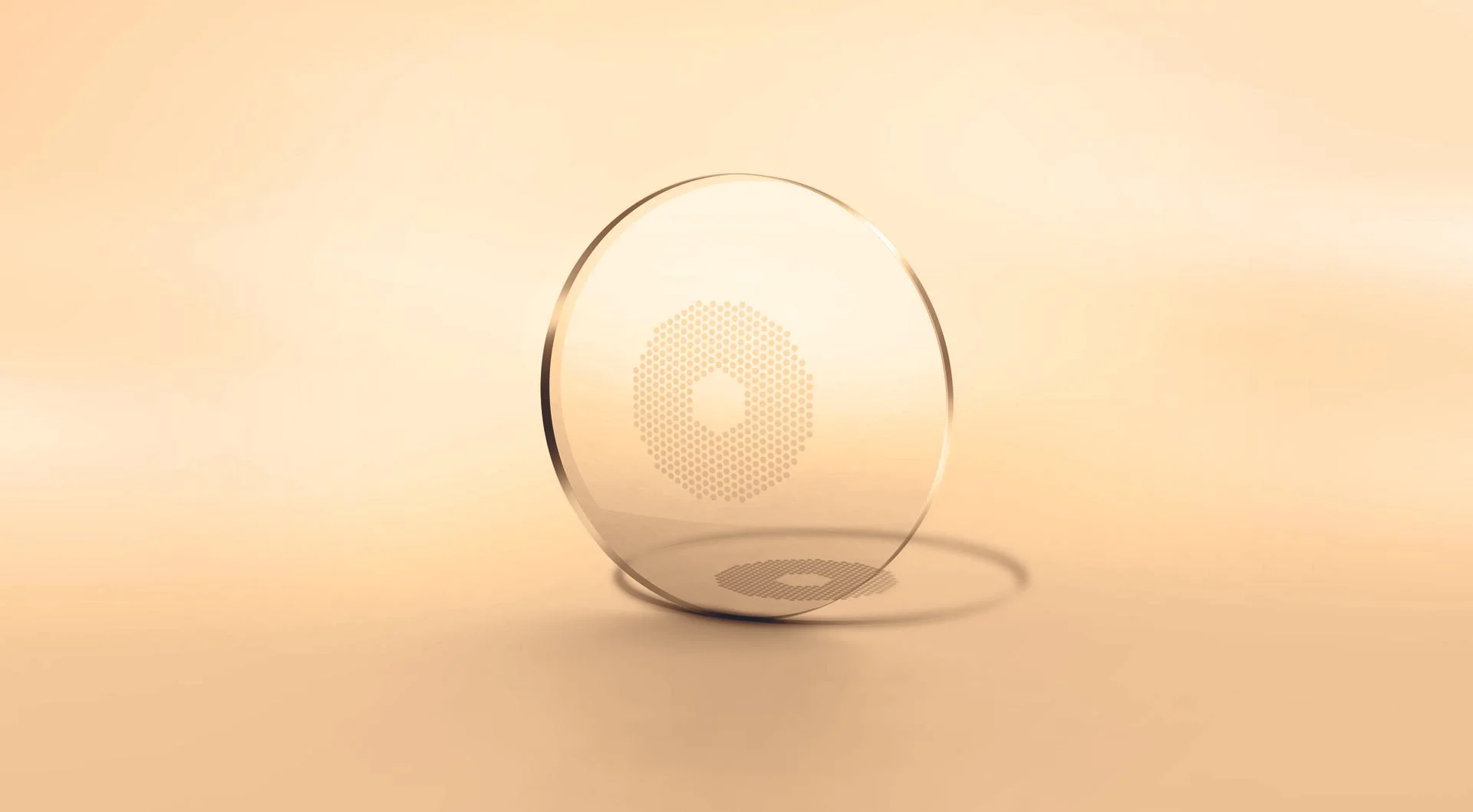
MiyoSmart is a children's spectacle lens developed by HOYA. It uses Defocus Incorporated Multiple Segments (DIMS) technology — a central clear zone for sharp vision, surrounded by around 400 tiny defocus segments. Research suggests up to 60% slower myopia progression compared with standard single-vision lenses when the glasses are worn at least 12 hours per day.¹
We also fit Stellest lenses by Essilor, which use Highly Aspherical Lenslet Target (HALT) technology with comparable clinical results (around 67% slowing in the 2-year trial).² Both look like regular glasses. Both are actively protecting your child's eyes while they correct vision. But both only work when they're fitted precisely — which is where most of our time with you goes. More on that below
HOW IT WORKS
Clear vision in the centre, a treatment signal in the periphery.
Myopia gets worse because the eye grows too long. In a standard lens, light focuses behind the peripheral retina — and that's the biological cue that tells the eye to keep stretching. DIMS lenses interrupt that signal.
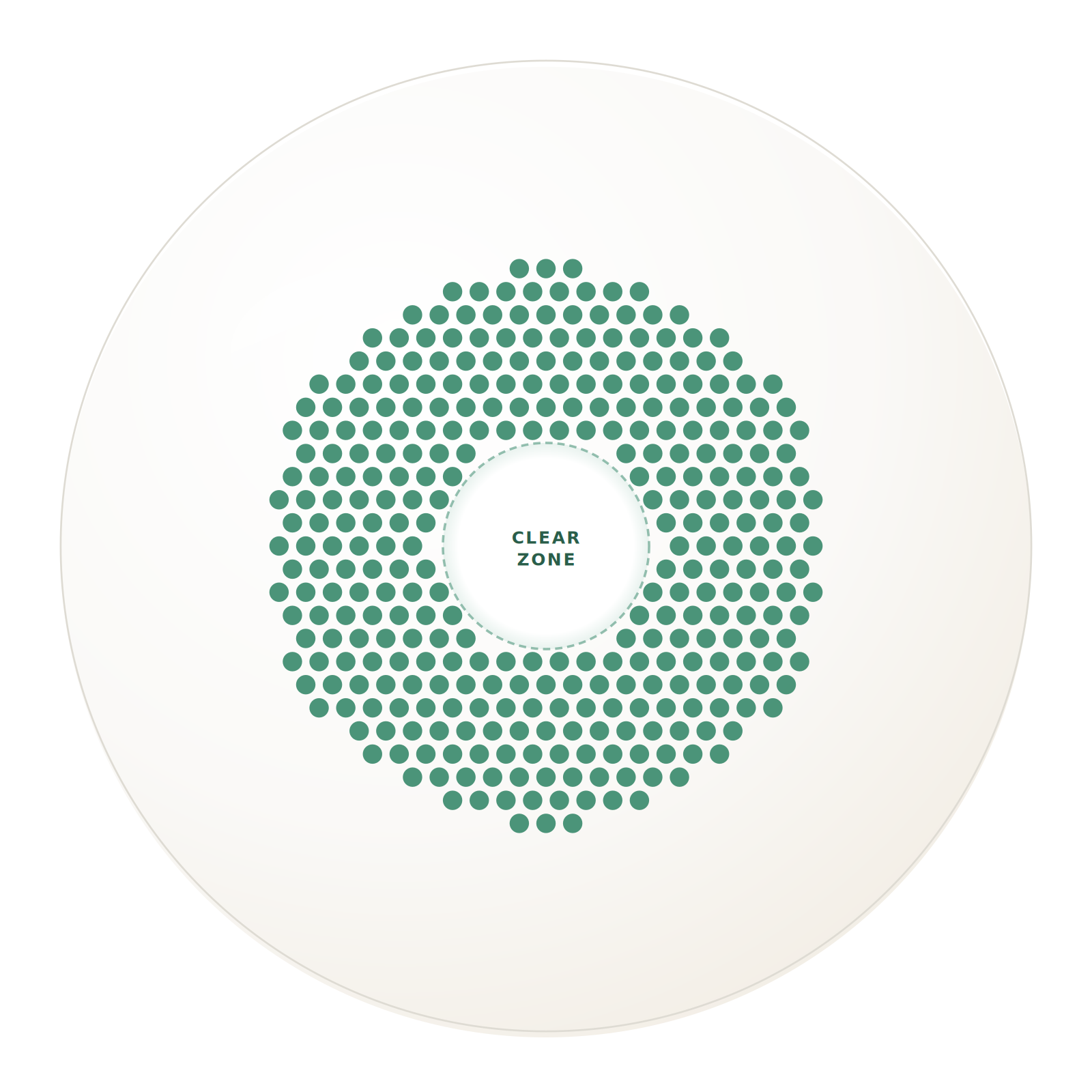
The central clear zone corrects your child's vision as normal, so they see sharply straight ahead. Around that clear zone sits a honeycomb of around 400 tiny defocus segments. Those segments deliver myopic defocus across the peripheral retina — the "slow down" signal the eye needs to stop elongating.
The lens material is impact-resistant polycarbonate — the same plastic used in safety glasses — with UV protection and anti-reflective coating built in. Designed for kids.
WHO MIYOSMART FITS BEST
The right treatment matters more than the brand name.
High myopia (above −6.00D)
DIMS alone may not be enough. We'd discuss combining with atropine or looking at Ortho-K.
Kids who remove their glasses
If they come off at school or for sport, the treatment effect drops fast. Contact lenses may work better.
Contact sport without glasses
Some sports are glasses-off by rule. If that's most of your child's week, Ortho-K might suit better.
Rapid progression in an older child
Fast progressors late in the myopia curve may need combination therapy from day one.
Age 4+ with mild to moderate myopia
The sweet spot: children at the start of their myopia journey, under −6.00D.
Already wears glasses without fuss
If glasses are already part of the routine, switching to MiyoSmart is seamless — they look identical.
Parents who prefer non-contact, non-drop
No lens insertion, no cleaning routine, no eye drops. Treatment sits in the glasses they already wear.
Younger kids not ready for contacts
For children under 8 or those who aren't ready for lens hygiene, glasses are the practical starting point.
MiyoSmart and Stellest work best for children from age 4 onwards with mild to moderate short-sightedness (roughly up to −6.00D) who will reliably wear glasses all day. A strong choice for younger children who aren't ready for contact lenses, and for families who prefer a non-contact, non-drop solution.
CLINICAL EVIDENCE
Up to 60% slower progression — and the effect holds.
The original 2-year randomised clinical trial (Lam et al. 2020) showed MiyoSmart reduced myopia progression by 59% and axial elongation by 60% compared with standard single-vision lenses.¹ Follow-up studies at 3 years and 6 years confirm the effect is sustained — the progression slowed early doesn't "catch up" once children keep wearing the lenses.³,⁴
Worth noting: these numbers come from clinical trials where lenses were fitted precisely and worn full-time. Real-world outcomes depend on hitting the same bar — a fit that puts the defocus segments where they need to be, and a child who keeps the glasses on. Get both right and the trial numbers are achievable. Miss one and the effect drops.
At every scheduled review, we measure your child's axial length using the Zeiss IOLMaster 500 — the same optical biometer ophthalmologists use before surgery. That means we can tell you whether the lenses are actually slowing eye growth in millimetres, not just whether the prescription has changed.
THE TECHNOLOGY ONLY WORKS WHEN FITTED CORRECTLY
If its not fitted properly — no treatment effect.
MiyoSmart and Stellest contain a central correction zone surrounded by hundreds of defocus segments. Those segments are what slow myopia progression. But if the lens isn't positioned correctly in front of the eye, the defocus segments don't align with the peripheral retina — and the myopia control effect is reduced or lost entirely. Fitting isn't a comfort question. It directly determines whether your child's glasses actually slow their short-sightedness.


What can go wrong with a poor fit
Wrong frame size or shape
Optical centre won't align with pupils — defocus segments end up in the wrong place.
Inaccurate pupil measurements
1–2mm of error in pupil distance or height shifts the defocus zone away from its optimal position.
Frame sliding, tilting, sitting too far
Lens position changes with every movement. Defocus zones need to stay centred and stable.
Inadequate frame adjustment
Loose or generic adjustment undermines the whole technology. Precision is non-negotiable.
Our 5-step fitting process
Comprehensive myopia assessment
Full eye examination including refraction, axial length measurement with the Zeiss IOLMaster 500, and progression rate assessment. This determines whether MiyoSmart is the right option and establishes a baseline for monitoring.
Frame selection that holds the lens in place
Not every children's frame is suited to myopia control lenses — the frame has to keep the optical centre reliably lined up with your child's pupils. We stock a range of frames that work well for this, including purpose-built options like Tomato Glasses (adjustable nose pads, flexible temples, secure fit) alongside designer children's brands. We'll help you choose one that fits your child's face shape and stays put through the school day.
Precision digital measurements
We capture exact pupil distance and height within the chosen frame using digital measurement tools — taken with the frame on your child's face, in their natural head position. Not estimated, not measured from a chart. Even 1–2mm matters.
Lens centration verification
When the glasses arrive, we don't just hand them over. We verify the optical centres align precisely with your child's pupils. If anything is off, we adjust or re-order.
Frame adjustment and education
Nose pad position, temple length, tilt, and vertex distance all adjusted for your child. We also show you what to look for at home — signs the glasses are slipping, sitting unevenly, or need readjustment.
THE ONE THING THAT MATTERS
Even a perfect fit doesn't work if the glasses aren't on.
Here's the caveat parents need to hear before committing. The Lam 2020 trial data is based on children wearing MiyoSmart constantly except when sleeping or showering — around 12 hours a day.¹ Partial wear reduces the benefit proportionally. If your child takes their glasses off at school or forgets them at weekends, they won't get the full treatment effect, even though they're wearing "the lens."
Fit and compliance are two sides of the same equation. Perfect fit + part-time wear = reduced effect. Full-time wear + poor fit = reduced effect. You need both. That's why the fitting process and the compliance conversation happen together at the consult — they're not separate issues.
Glasses "for reading only"
Treatment only happens when the lens is in front of the eye. Part-time wear = part-time effect.
Removed for sport or outdoor play
Several hours off daily significantly reduces the clinical benefit.
Self-conscious about the frame
If your child doesn't like their glasses, they won't wear them. Frame choice is a compliance decision.
Forgotten between houses
A spare pair at each house solves this. We'll discuss it at the fitting if it's relevant.
Glasses on before breakfast, off at bedtime
The simple rule most of our families follow. First thing in the morning, last thing at night.
Same pair every day
No switching to "weekend glasses" that don't have DIMS. Consistency is the whole game.
Comfortable, well-fitted frames
Glasses that slip, pinch or fog up get taken off. We spend proper time at the fitting to make sure the frames stay put.
Combining with atropine where needed
For kids who struggle with full-time wear, combining with low-dose atropine maintains the benefit.
WHY CONCORD EYECARE FOR MIYOSMART
Early adoption, precision fitting, and axial length biometry that proves it's working.

Fitting MiyoSmart since the Australian launch
Dr Mark Joung was one of the first Australian optometrists to prescribe MiyoSmart. Hundreds of fittings since — we know which children do well on MiyoSmart or Stellest alone, and which ones benefit more from combining it with low-dose atropine.
Precision fitting with frames chosen for the job
Not every children's frame holds myopia control lenses correctly. We fit in frames chosen to keep the optical centre precisely aligned — including purpose-built options like Tomato Glasses and a range of designer children's brands. Every pair is verified with digital pupil centration measurements and re-checked at collection.
Zeiss IOLMaster 500 biometry at every review
The gold-standard device ophthalmologists use pre-surgery. We measure axial length in millimetres, so you can see whether the lenses are actually slowing eye growth — not just guess from prescription change.
HOW MUCH DO MIYOSMART LENSES COST IN SYDNEY
Not just lenses. A management package
At $600 per pair, MiyoSmart or Stellest lenses come as part of a 12-month myopia management package — not just the glasses. That includes the lenses with premium coatings, all follow-up reviews, and six-monthly axial length measurements with our Zeiss IOLMaster 500 so you can see the lenses are actually slowing eye growth, in millimetres, not just assume they are. What changes the total is the frame — we stock a range of children's frames picked to suit myopia control.
- Comprehensive myopia assessment
- Baseline axial length measurement (Zeiss IOLMaster 500)
- MiyoSmart or Stellest lenses with premium coatings
- Expert frame selection from our range
- Precision digital pupil centration measurements
- Lens verification at collection + frame adjustment
- Six-monthly axial length measurements with the Zeiss IOLMaster 500
- All follow-up review consultations
- Progression monitoring and treatment adjustments
- 12-month lens warranty for significant prescription changes (−0.75D or more)
MIYOSMART VS OTHER MYOPIA CONTROL OPTIONS
Which option fits your child's life?
There's no single "best" treatment. The right option depends on your child's age, lifestyle, prescription strength, and how reliable they are with glasses or lens hygiene.
| Treatment | Efficacy | Age | How it's worn | Best for |
|---|---|---|---|---|
| MiyoSmart / Stellest | Up to 60–67% | 4+ | Daytime glasses, 12+ hrs/day | Younger kids, first-time wearers, simplicity |
| Ortho-K | 50–60% | 6+ | Overnight lenses only | Active kids, sport, glasses-free daytime |
| MiSight | 59% | 8–12 (start) | Daily disposable, 10+ hrs/day | Older kids, contacts preference |
| Atropine drops | ~30–50% | 4+ | Once nightly | Very young kids, combination with glasses |
MIYOSMART FAQ
Miyosmart questions, answered
What age can my child start MiyoSmart?
From around age 4 onwards. Particularly suitable for younger children who aren't ready for contact lenses. MiyoSmart is the simplest myopia control option available.
Do they look different from normal glasses?
No — MiyoSmart and Stellest lenses look and feel identical to regular glasses. Your child and their friends won't notice any difference.
MiyoSmart or Stellest — which is better?
Both are clinically proven. We predominantly fit MiyoSmart due to our deep experience with the lens, but Stellest is also an excellent option. We'll recommend the better match for your child at the assessment.
Why does fitting matter so much?
The defocus zones have to align precisely with your child's pupils. Poor frame selection or inaccurate measurements can significantly reduce the myopia control effect — same lens, same brand, weaker outcome.
What frames do you recommend for myopia control lenses?
Not every children's frame is suitable — the frame has to hold the lens reliably in the correct position. We stock a range that works well for myopia control, including purpose-built options like Tomato Glasses and several designer children's brands. We'll help you pick the right one at the fitting.
What if my child's prescription changes?
Our packages include a 12-month warranty for significant changes (−0.75D or more). We replace the lenses at no additional cost. Follow-up visits are included for the first 12 months.
Can MiyoSmart be combined with other treatments?
Yes. For faster progressors we often pair MiyoSmart with low-dose atropine. They also work as a backup on days when Ortho-K or MiSight lenses aren't worn.
How often are check-ups?
Every 6 months for progression monitoring. We use the Zeiss IOLMaster to measure axial length — that's how we confirm the lenses are actually slowing eye growth, not just assume it from the prescription. All reviews in the first 12 months are included.
MIYOSMART REFERENCES
Clinical Sources
- Lam CSY, Tang WC, Tse DYY, Lee RPK, Chun RKM, Hasegawa K, Qi H, Hatanaka T, To CH. Defocus Incorporated Multiple Segments (DIMS) spectacle lenses slow myopia progression: a 2-year randomised clinical trial. Br J Ophthalmol. 2020;104(3):363-368.
- Bao J, Huang Y, Li X, et al. Spectacle Lenses With Aspherical Lenslets for Myopia Control vs Single-Vision Spectacle Lenses: A Randomized Clinical Trial. JAMA Ophthalmol. 2022;140(5):472-478.
- Lam CSY, Tang WC, Lee PH, Zhang HY, Qi H, Hasegawa K, To CH. Myopia control effect of defocus incorporated multiple segments (DIMS) spectacle lens in Chinese children: results of a 3-year follow-up study. Br J Ophthalmol. 2022;106(8):1110-1114.
- Lam CSY, Tang WC, Zhang HY, et al. Long-term myopia control effect and safety in children wearing DIMS spectacle lenses for 6 years. Sci Rep. 2023;13(1):5475.
- Brennan NA, Toubouti YM, Cheng X, Bullimore MA. Efficacy in myopia control. Prog Retin Eye Res. 2021;83:100923.
- Wolffsohn JS, et al. IMI — Clinical Management Guidelines Report. Invest Ophthalmol Vis Sci. 2019;60(3):M184-M203.
Last clinically reviewed: April 2026
BOOK YOUR MIYOSMART CONSULTATION
Ready to see if MiyoSmart is right for your child?
Book a myopia consult and we'll measure axial length with the Zeiss IOLMaster, assess progression risk, and recommend the right treatment for your child's age and lifestyle. If glasses are the path, we'll walk you through exactly how we fit them — digital centration, frame selection, verification at collection — because that's what makes the 60% efficacy number real instead of theoretical.